Unraveling the Digital Scroll: A Deep Dive into LongCatImage
What is LongCatImage? Uncover the origins of this vertical AI trend. Learn to create seamless, infinite scrolls for your content with karavideo.ai.
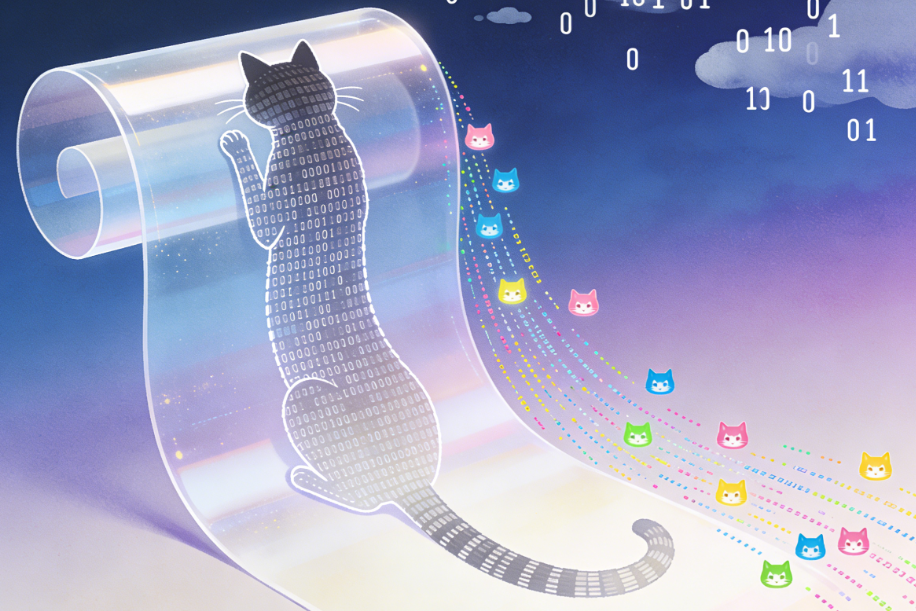
In the rapidly evolving landscape of artificial intelligence and digital content creation, new terminologies and concepts seem to emerge overnight. From "latent space" to "inpainting," the vocabulary of the modern creator is expanding. One such term that has recently piqued the curiosity of designers, marketers, and meme enthusiasts alike is "LongCatImage." It sounds playful, perhaps even nostalgic for internet veterans, but it represents a significant leap in how we manipulate digital canvas dimensions. If you have found yourself scrolling through endless vertical visual stories or marveling at AI-generated art that seems to stretch infinitely, you have likely encountered this phenomenon.
In this comprehensive guide, we will answer the pressing question: What is LongCatImage? We will explore its origins, the technology that powers it, its practical applications in modern marketing and art, and how platforms like karavideo.ai are democratizing access to these powerful capabilities.
The Genesis of the Stretch: Defining the Concept
To begin, we must address the core query: What is LongCatImage?
At its simplest, a LongCatImage refers to a digital image that has been generated or manipulated to have an extreme aspect ratio, typically vertical, far exceeding standard dimensions like 4:3 or 16:9. While the name pays homage to the legendary "Longcat" internet meme—a cat photoshopped to appear infinitely long—the term in the context of Generative AI refers to a specific capability: the seamless extension of visual content along a single axis (usually vertical) without losing coherence, resolution, or style.
Unlike traditional panoramic photography, which stitches together separate photos, a LongCatImage in the AI era is often born from "outpainting." This is a process where an AI model predicts and generates new pixels beyond the original borders of an image. By repeatedly extending the canvas and filling in the new space with contextually appropriate details, creators can generate towering skyscrapers that pierce the atmosphere, endless waterfalls, or narrative comic strips that flow vertically without a break.
Understanding What is LongCatImage? requires us to see it not just as a funny tall picture, but as a defiance of the traditional square canvas. It is a format that mirrors the way we consume content on mobile devices—the infinite scroll.
The Technical Backbone: How AI "Stretches" Reality
The magic behind these extended visuals lies in the sophisticated architecture of diffusion models. When you ask an AI to extend an image, it doesn't just copy and paste textures. It analyzes the semantic content of the existing image—the lighting, the brushstrokes, the subject matter—and "hallucinates" a continuation that makes logical and visual sense.
Contextual Awareness and Continuity
For a LongCatImage to be successful, the AI must maintain "contextual consistency." If the top of the image shows a sunny sky, the AI needs to know that as it extends downward, it should transition to the horizon, then perhaps a landscape, and finally the ground. It cannot simply switch styles halfway through. Tools found on karavideo.ai excel in this area, offering intuitive interfaces where users can guide this extension process, ensuring that the "LongCat" effect feels like a single, cohesive piece of art rather than a patchwork quilt.
The Role of Latent Space
In technical terms, the AI is navigating "latent space"—a multi-dimensional map of concepts. When creating a LongCatImage, the model is essentially taking a journey through this space, finding the path that connects the concept of "sky" to "ground" through a long, vertical trajectory. The "LongCat" nature comes from the user's ability to keep pushing the boundaries, asking the AI, "And what comes below that? And below that?"
Why the "LongCat" Format Matters in Modern Content
You might be wondering, apart from the novelty, does this format have real value? When we deeply analyze What is LongCatImage?, we discover it is more than a meme; it is a highly effective communication format tailored for the smartphone era.
1. The Mobile-First Experience
We live in a vertical world. Smartphones are designed for vertical scrolling. Traditional wide images often look small and cramped on a phone screen. A LongCatImage, however, fills the screen. As the user scrolls, they are taken on a journey. This format is native to platforms like TikTok, Instagram Stories, and specialized webtoons. By utilizing this format, creators can maximize screen real estate and engagement time.
2. Visual Storytelling and Infographics
Infographics have long utilized the "tall" format to guide readers through data step-by-step. With AI generation, this becomes even more dynamic. Imagine a visual history of architecture that starts with ancient foundations at the bottom and evolves into futuristic sci-fi spires at the top. This is a classic application of the LongCatImage concept—using verticality to represent time or progress.
3. Immersive Web Design
Web designers are increasingly using "parallax scrolling" effects where the background image moves at a different speed than the foreground. A seamless, high-resolution LongCatImage serves as the perfect background asset for these websites, creating an immersive feeling of depth and continuous movement without the need for heavy video files.
Exploring Creative Possibilities on Karavideo.ai
Now that we have established the theory, how do you actually create one? This is where karavideo.ai shines. As a comprehensive hub for AI tools, it provides the resources necessary for creators to experiment with outpainting and aspect ratio manipulation without needing a degree in computer science.
Step-by-Step Creation
On platforms integrated with karavideo.ai, the workflow often looks like this:
- Start with a Base: You generate or upload a standard image.
- Select the Direction: You choose to expand the canvas vertically (up or down).
- Prompt the Extension: You describe what should appear in the new empty space. For example, if your base is a tree, you might prompt "deep roots underground with glowing crystals" for the bottom extension.
- Iterate: You repeat this process, building your image segment by segment.
This iterative process answers the practical side of What is LongCatImage?—it is a collaborative layering of imagination and algorithmic prediction. The tools available through karavideo.ai ensure that the transitions between these generated segments remain smooth, preserving the illusion of a single, continuous image.
Ethical Considerations and Common Pitfalls
As we embrace these tools, it is vital to remain aware of potential challenges.
The Distortion Dilemma
One common issue when generating extreme aspect ratios is geometric distortion. As the AI moves further away from the original context, it might struggle to keep perspective correct. A building might start to lean, or a character's anatomy might become elongated in unnatural ways. This is often jokingly referred to as "Longcatting" in a negative sense. Skilled users mitigate this by using overlapping guidance—ensuring the AI always sees a bit of the previous section to maintain alignment.
Data Consumption and Resolution
A true LongCatImage can become massive in terms of pixel count. Standard AI generators often output at fixed resolutions (e.g., 1024x1024). Stacking ten of these creates a 1024x10240 pixel image. Handling files of this size requires robust hardware or cloud-based solutions like those offered by karavideo.ai, which can process and render high-fidelity outputs without crashing your local browser.
Beyond the Meme: The Artistic Evolution
The term "LongCat" originated from a grainy photo of a cat held by its torso, appearing humorously long. It became a symbol of the internet's absurdity. Today, asking What is LongCatImage? reveals how far we have come. We have transitioned from crude Photoshop edits to sophisticated neural networks that can generate infinite worlds.
Artists are using this technique to create "scroll-art." These are digital paintings that can only be appreciated by scrolling. They disrupt the gallery experience, which typically presents art as a static whole. Scroll-art forces the viewer to experience the piece linearly, controlling the pacing of the narrative with their thumb. This is a fundamental shift in visual interaction, birthed from the marriage of meme culture and advanced technology.
Practical Tips for Your First LongCatImage
If you are ready to try this yourself, here are some expert tips to ensure success:
- Plan Your Narrative: Don't just extend for the sake of length. Have a plan. Is it a descent into the ocean? A climb up a beanstalk? A timeline of history? Structure helps the AI stay coherent.
- Overlap is Key: When using outpainting tools, always ensure the AI is looking at at least 30-50% of the existing image when generating the new section. This "overlap" is the glue that binds the LongCatImage together.
- Consistent Prompts: Keep your style descriptors (e.g., "oil painting," "cyberpunk," "photorealistic") consistent in every prompt for every section. If you change the style halfway down, the illusion breaks.
- Use High-Quality Tools: Utilize the robust engines available on karavideo.ai. Their optimized models are better at handling the context retention required for long-form image generation compared to basic, entry-level generators.
The Future of Vertical Generative Media
As we look ahead, the definition of What is LongCatImage? will likely expand further. We are already seeing the emergence of "LongCatVideo"—AI video generators that can extend clips endlessly in time or space. The principles remain the same: seamless continuation and contextual awareness.
We can expect AI models to get better at "global coherence." Currently, an AI might forget what the top of the tower looks like by the time it generates the bottom. Future models will likely hold the entire "LongCat" in memory, ensuring that the lighting at the bottom matches the light source established at the very top.
Conclusion: Embracing the Infinite Canvas
In summary, when we ask What is LongCatImage?, we are asking about the potential of AI to break the boundaries of the frame. It is a technique that turns a static window into a sliding door, opening up vertical (or horizontal) vistas that were previously impossible to capture in a single shot.
Whether you are a marketer looking to create engaging social media stories, an artist exploring new narrative formats, or simply a user having fun with the boundless capabilities of Generative AI, the LongCatImage represents a new frontier in digital creativity. It combines the humor of internet culture with the serious power of neural networks.
By leveraging the advanced tools and user-friendly platforms provided by karavideo.ai, you can step into this world of infinite scrolling. The only limit is no longer the edge of the canvas, but how far you are willing to scroll. So, go ahead—start your generation, and see just how deep the rabbit hole goes.