Unlocking a New Era of Creativity: An In-Depth Look at DALL-E 3
For artists, designers, marketers, and hobbyists, DALL-E 3 opens up a universe of creative possibilities
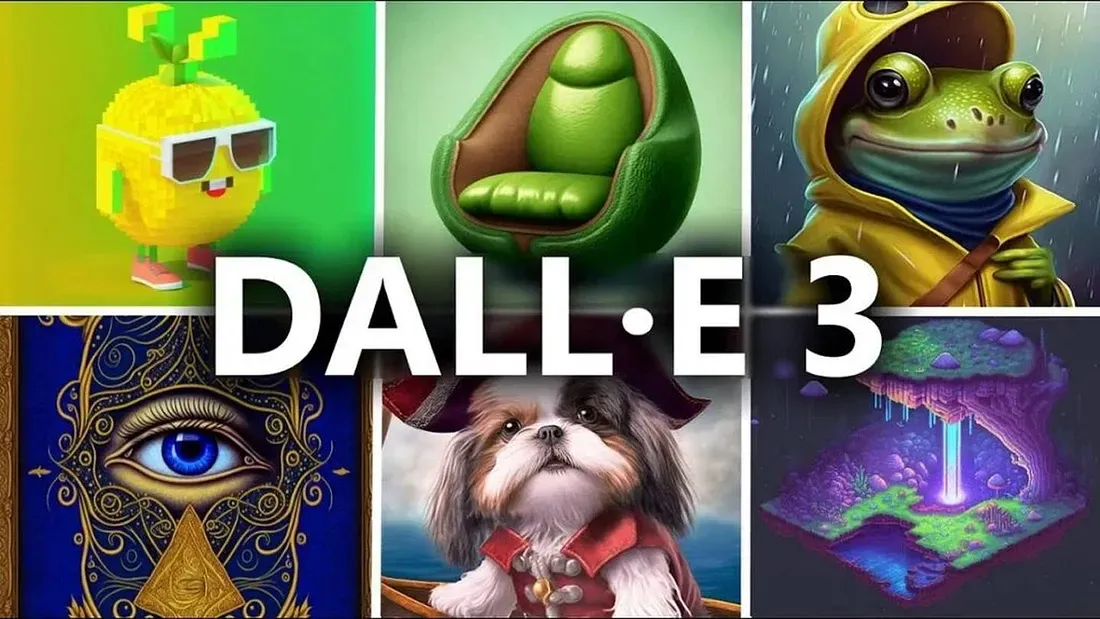
The world of artificial intelligence is moving at an incredible pace, constantly introducing tools that redefine the boundaries of digital creation. Among the most exciting developments is the evolution of text-to-image models. These powerful systems can turn simple text descriptions into stunning, complex visuals. At the forefront of this revolution is DALL-E 3, a groundbreaking model that has captured the imagination of creators everywhere.
This powerful tool represents a significant leap forward in AI-generated art. It offers enhanced capabilities, greater accuracy, and a more intuitive user experience than ever before. For artists, designers, marketers, and hobbyists, DALL-E 3 opens up a universe of creative possibilities. Let's explore what makes this model so special, how it’s changing the creative landscape, and how you can harness its power on platforms like karavideo.ai.
From Pixels to Masterpieces: The Evolution of DALL-E
To understand the impact of DALL-E 3, it's helpful to look at its predecessors. The journey began with the original DALL-E, which first demonstrated the incredible potential of generating images from text prompts. While revolutionary, it had limitations. The images were often low-resolution, and the AI struggled with complex or abstract concepts.
DALL-E 2 marked a major improvement. It produced higher-resolution images and showed a better grasp of relationships between objects. It could create more coherent and stylistically diverse visuals, making it a viable tool for many creative projects. However, users still faced challenges with "prompt engineering." Crafting the perfect text description to get the desired output required skill and patience. The model sometimes misinterpreted nuances, leading to unexpected or inaccurate results.
This is where DALL-E 3 changes the game. Developed with a focus on understanding natural language, it excels at translating your ideas into images with astonishing precision. The need for complicated, jargon-filled prompts is gone. You can now describe what you want to see in simple, conversational sentences, and DALL-E 3 will deliver.
What Makes DALL-E 3 a Creative Powerhouse?
The advancements in DALL-E 3 are not just incremental; they represent a fundamental shift in how we interact with creative AI. Its ability to grasp context, nuance, and detailed instructions is what sets it apart.
Superior Prompt Understanding
The standout feature of DALL-E 3 is its deep understanding of language. It is built to think more like a human, interpreting long, descriptive sentences with ease.
- No More Prompt Engineering: Forget trying to trick the AI with keywords. You can now write a full paragraph describing a scene, and the model will capture the specific details, mood, and composition you envision.
- Greater Accuracy: It's much better at handling spatial relationships, counting objects, and rendering text within images. If you ask for "three red balloons floating above a blue house," you are far more likely to get exactly that.
- Adherence to Detail: The model pays close attention to every part of your prompt. Minor details, like the color of a character's eyes or the specific style of a background, are rendered with much higher fidelity.
Enhanced Cohesion and Realism
DALL-E 3 produces images that are more visually coherent and aesthetically pleasing. The elements within the image feel naturally connected, and the overall composition is often more balanced and artistic. This applies to both photorealistic renderings and stylized illustrations. The model has a better grasp of lighting, shadows, and textures, which adds a layer of realism that was harder to achieve with previous versions.
Integration for a Seamless Workflow
One of the most exciting developments is the integration of DALL-E 3 into broader creative ecosystems. Platforms like karavideo.ai have incorporated it into their suite of tools, allowing creators to generate stunning visuals directly within their video production workflow. Instead of juggling multiple applications, you can describe an image, generate it, and immediately use it as a starting point for a video—all from a single dashboard. This seamless access transforms your creative process, making it faster, more intuitive, and more powerful. Describe, pick your model, and generate. It’s that simple.
DALL-E 3 vs. Other Leading Models: A Comparative Look
The AI art space is rich with powerful tools, each with its unique strengths. Alongside DALL-E 3, models like Midjourney, Stable Diffusion XL, and Krea AI are popular choices for creators.
- Midjourney: Known for its highly artistic and often dramatic aesthetic. Midjourney excels at creating beautiful, stylized images that have a distinct "look." While powerful, it can sometimes be less literal in its interpretation of prompts compared to DALL-E 3.
- Stable Diffusion XL: This open-source model is incredibly versatile and customizable. It's a favorite among developers and technical artists who enjoy fine-tuning parameters and training the model on their own datasets. It offers immense freedom but can have a steeper learning curve for beginners.
- Krea AI: This tool focuses on real-time generation and enhancement, allowing for interactive and dynamic creative sessions. It's particularly strong for iterating on ideas quickly and seeing immediate visual feedback.
DALL-E 3 carves out its own niche by prioritizing ease of use and prompt accuracy. Its strength lies in its ability to be a reliable and predictable creative partner. You say what you want, and it delivers with remarkable consistency. This makes it an ideal choice for commercial applications, storytelling, and any project where specific visual details are crucial. On platforms like karavideo.ai, having access to these different engines from one place is a massive advantage. You can choose the best tool for the job without hopping between platforms, enjoying seamless access to the world’s best creative engines.
Transforming Industries: The Practical Applications of DALL-E 3
The impact of DALL-E 3 extends far beyond being a fun novelty. It is a practical tool that is already reshaping workflows across various industries.
1. Marketing and Advertising
Speed is everything in marketing. DALL-E 3 allows teams to brainstorm and visualize campaign concepts in minutes, not days.
- Rapid Prototyping: Generate dozens of ad variations, social media posts, and website banners instantly.
- Personalized Content: Create custom visuals for targeted audience segments without expensive photoshoots.
- Storyboarding: Quickly produce storyboards for video ads to align the creative team before production begins.
2. Entertainment and Media
From indie filmmakers to large studios, DALL-E 3 is becoming an invaluable tool for pre-production and concept art.
- Concept Art: Artists can generate rich character designs, environment concepts, and prop ideas based on script descriptions.
- Inspiration for Writers: A writer experiencing block can generate images to help visualize a scene or character, sparking new ideas.
- Video Creation: With tools like karavideo.ai, you can start with a DALL-E 3 image and animate it, adding effects to create dynamic video content from a simple text prompt.
3. Education and Training
Complex ideas are often best explained visually. DALL-E 3 makes it easy for educators to create custom illustrations for their teaching materials.
- Custom Diagrams: Generate scientific diagrams, historical scenes, or abstract concept visualizations tailored to a specific lesson.
- Engaging Materials: Create colorful and engaging worksheets, presentations, and learning aids that capture students' attention.
4. Design and Fashion
Designers can use DALL-E 3 to explore new patterns, product shapes, and fashion concepts at an accelerated pace.
- Mood Boards: Quickly assemble mood boards with a specific aesthetic by generating images that fit a theme.
- Pattern Generation: Create unique textile patterns or graphic designs for products.
Navigating the Ethical Landscape
With great power comes great responsibility. The rise of hyper-realistic AI image generation brings important ethical considerations to the forefront.
Copyright and Ownership
Who owns an AI-generated image? The person who wrote the prompt? The company that created the AI? The answer is still being debated in courtrooms and boardrooms around the world. Current policies often state that users have rights to the images they create, but the legal framework is evolving. It's crucial for creators to understand the terms of service of the platform they are using.
Misinformation and Deepfakes
The ability to create convincing photorealistic images of events that never happened poses a significant risk for the spread of misinformation. AI developers are actively working on safeguards, such as watermarking and classifiers that can detect AI-generated content, but vigilance from users and platforms is essential.
Bias in AI
AI models are trained on vast datasets of images and text from the internet. If this data contains societal biases, the AI can learn and perpetuate them. For example, an AI might associate certain professions with a specific gender or ethnicity. Developers are continuously working to mitigate these biases by curating training data and implementing fairness checks.
Impact on Artists
Many artists worry that AI will devalue their skills and take their jobs. While AI can automate certain tasks, it can also be viewed as a powerful new tool in an artist's toolkit. It can handle the tedious aspects of creation, freeing up artists to focus on high-level concepts and unique creative expression. The future will likely involve a collaboration between human creativity and artificial intelligence, not a replacement of one by the other.
Getting Started with DALL-E 3
Ready to dive in and start creating? The beauty of DALL-E 3 is its accessibility. You don't need to be a tech expert to get amazing results.
- Start with a Clear Idea: Before you write your prompt, take a moment to visualize what you want. Think about the subject, the setting, the style, and the mood.
- Write Descriptively: Use simple, clear language. The more detail you provide, the better the result will be. Instead of "a cat," try "a fluffy ginger cat with green eyes, sleeping on a stack of books in a cozy library."
- Specify the Style: DALL-E 3 can emulate a wide range of artistic styles. Include terms like "photorealistic," "digital art," "oil painting," "3D render," or "pencil sketch" in your prompt.
- Iterate and Refine: Your first result might not be perfect. Don't be afraid to tweak your prompt and generate again. Change a few words, add more details, or try a different style to see how it affects the output.
The Future is a Blank Canvas
DALL-E 3 is more than just an image generator; it's a catalyst for creativity. It democratizes art creation, empowering anyone with an idea to bring it to life visually. By breaking down the barriers of technical skill and complex software, it invites a new generation of creators to express themselves.
As this technology continues to evolve, its integration into comprehensive platforms will become even more crucial. The ability to generate an image with DALL-E 3, animate it with other AI video tools, and add AI-powered effects—all in one place—is the future of content creation. It’s a future of unparalleled speed, freedom, and creative power, and it's already here.