Unleash Your Creativity: A Deep Dive into Stable Diffusion XL
On platforms like karavideo.ai, which integrate top-tier tools like SDXL, the power to generate stunning visuals is right at your fingertips
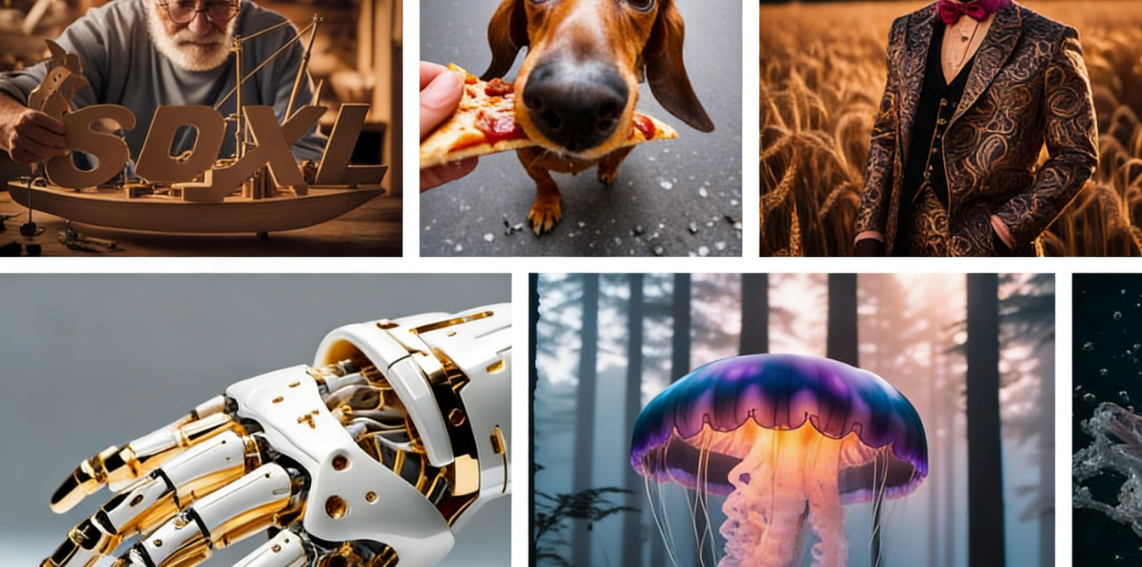
The world of artificial intelligence is moving at an incredible pace, and nowhere is this more visible than in the realm of image generation. Among the powerful tools shaping this new creative landscape, Stable Diffusion XL (SDXL) stands out as a true game-changer. This advanced AI model has unlocked unprecedented levels of quality, realism, and control, empowering creators to bring their wildest visions to life.
Whether you're an artist, a designer, a marketer, or simply a creative enthusiast, understanding SDXL is key to tapping into the future of visual content. On platforms like karavideo.ai, which integrate top-tier tools like SDXL, the power to generate stunning visuals is right at your fingertips. Let's explore what makes this model so revolutionary.
1. What is Stable Diffusion XL and Why Does it Matter?
Stable Diffusion XL is a state-of-the-art, open-source, text-to-image AI model developed by Stability AI. It represents a significant leap forward from its predecessors, capable of generating highly detailed, photorealistic, and aesthetically pleasing images from simple text descriptions, known as "prompts."
Its significance extends far beyond just making pretty pictures. For the creative industries, SDXL is a transformative force. It democratizes high-end content creation, allowing individuals and small businesses to produce visuals that once required expensive software, extensive skills, and significant time investment. Artists can rapidly prototype ideas, designers can generate unique assets, and marketers can create compelling campaign visuals in minutes.
Platforms like karavideo.ai have harnessed the power of models like Stable Diffusion XL, DALL-E 3, Midjourney, and Krea AI, placing them all within a single, streamlined dashboard. This integration removes technical barriers, allowing you to describe your idea, pick a model, and generate your vision seamlessly. It's a fundamental shift in the creative workflow, moving from manual execution to creative direction.
2. Key Features and Advancements: What Makes SDXL Superior?
SDXL isn't just an incremental update; it's a major architectural overhaul. It delivers substantial improvements over previous versions of Stable Diffusion, making it a more powerful and versatile tool for creators.
Enhanced Image Quality and Realism
The most noticeable improvement is the sheer quality of the output. SDXL generates images with a native resolution of 1024x1024 pixels, resulting in far greater detail and clarity. It excels at rendering complex textures, realistic lighting, and deep shadows. Faces, hands, and other intricate details, which were often challenging for earlier models, are rendered with much higher accuracy.
Richer Colors and Better Composition
SDXL boasts a more vibrant and accurate color palette. It produces images with deeper blacks and brighter whites, giving them a professional, high-contrast look. The model also has a better understanding of artistic principles like composition, balance, and framing. It can generate more dynamic and aesthetically pleasing scenes that feel thoughtfully constructed.
Improved Prompt Understanding
One of the biggest frustrations with earlier models was their difficulty in interpreting complex or nuanced prompts. SDXL features a more sophisticated language model, allowing it to better understand longer, more descriptive prompts. It can grasp concepts, relationships between objects, and stylistic instructions with greater precision. This means you can use simpler prompts to get the results you want, without needing long, convoluted "negative prompts" to steer the model away from errors.
Superior Text Generation
A persistent challenge for image generation AI has been rendering legible text. SDXL marks a significant step forward in this area. While not perfect, it is far more capable of generating clear and coherent text within images, opening up new possibilities for creating posters, logos, and other graphics that combine words and visuals.
3. Unleashing Creativity: Applications and Use Cases
The versatility of Stable Diffusion XL makes it an invaluable tool across numerous fields. Its ability to quickly turn ideas into high-quality visuals has a wide range of practical applications.
Art and Digital Creation
For artists, SDXL is an incredible co-pilot. It can be used to:
- Generate conceptual art: Quickly visualize characters, environments, and storyboards for games, films, and comics.
- Explore new styles: Experiment with different artistic movements, from Impressionism to Cyberpunk, by simply describing them in a prompt.
- Create unique textures and patterns: Generate abstract designs and intricate patterns for use in larger digital compositions.
Design and Advertising
Graphic designers and marketers can leverage SDXL to accelerate their workflows:
- Product mockups: Create photorealistic images of products in various settings without the need for expensive photoshoots.
- Marketing visuals: Design eye-catching social media posts, ad banners, and website heroes that grab audience attention.
- Logo and branding inspiration: Rapidly prototype logo concepts and branding elements to find the perfect visual identity.
Content Creation and Entertainment
From YouTubers to bloggers, content creators can use SDXL to enhance their work:
- Custom thumbnails: Generate unique and compelling thumbnails that increase click-through rates.
- Illustrations for articles and videos: Create custom images to accompany blog posts or explain concepts in a video.
- Fictional world-building: Bring fantasy or sci-fi worlds to life by generating detailed images of landscapes, creatures, and architecture.
On karavideo.ai, these use cases are amplified. By integrating SDXL alongside other powerful models like Krea AI, DALL-E 3, and Midjourney, you have a complete creative suite. You can generate an image with one tool and then use it as a starting point to create a video with another, all without leaving the platform.
4. Under the Hood: A Technical Overview of SDXL
The magic of Stable Diffusion XL comes from its innovative two-stage architecture. This ensemble pipeline approach is what enables it to achieve such high-quality results.
The Base Model
The first stage involves a large "base" model. This model is responsible for the initial image generation, taking the text prompt and producing a latent "noise" image that contains the core composition and elements of the final picture. This base model is larger and more powerful than its predecessors, allowing it to capture a more complex understanding of the user's request. It works at the 1024x1024 resolution, laying a strong foundation for the final output.
The Refinement Model
Once the base model has done its work, the output is passed to a second, smaller "refinement" model. The job of this refiner is to add the fine details, vibrant colors, and high-frequency textures that make the image look crisp and photorealistic. It specializes in correcting small imperfections and enhancing the overall aesthetic quality. This two-step process allows SDXL to efficiently balance large-scale composition with intricate detailing.
CLIP and Language Processing
At the heart of its prompt comprehension is the use of two different text encoders, including one of the largest OpenCLIP models trained to date (CLIP ViT-g/14). By using two separate models, SDXL can process and understand language with more nuance. This dual-encoder system is a key reason why it can interpret shorter, more natural prompts and still deliver accurate results.
5. Challenges and Limitations
Despite its incredible capabilities, Stable Diffusion XL is not without its challenges. It's important to be aware of its limitations to use it effectively and responsibly.
Ethical Concerns
Like all powerful AI, SDXL can be misused. The potential for creating convincing deepfakes, generating harmful or biased content, and infringing on the copyrights of living artists are significant ethical hurdles. Developers and platforms are actively working on safeguards, such as watermarking and content filters, but user responsibility remains crucial.
Computational Requirements
Running SDXL locally requires a powerful computer with a high-end GPU and substantial VRAM. This can be a barrier for many users. This is where cloud-based platforms shine. They handle all the computational heavy lifting, giving anyone with an internet connection access to this powerful technology without needing expensive hardware.
Artistic Bias and Anomalies
The model is trained on a vast dataset of existing images, and this dataset can contain inherent biases related to culture, gender, and aesthetics. This can sometimes result in outputs that perpetuate stereotypes. Furthermore, while vastly improved, SDXL can still occasionally produce strange anomalies, especially with complex scenes or unusual requests.
6. The Future of AI-Powered Creativity
Stable Diffusion XL is not the end of the road; it's a milestone on a much longer journey. The future potential is immense. We can expect future models to become even more realistic, more controllable, and better integrated into creative workflows.
Imagine AI models that can generate not just static images, but fully interactive 3D environments from a text prompt. Or models that understand video and can generate entire animated sequences complete with motion and sound. The line between different media formats will continue to blur, leading to new, hybrid forms of creative expression.
The evolution will also focus on accessibility and control. Tools will become more intuitive, allowing for fine-grained editing of generated images—changing a subject's pose, adjusting the lighting, or swapping out objects with natural language commands.
Platforms are already leading this charge. With its unified dashboard and access to multiple cutting-edge AI engines, karavideo.ai offers a glimpse into this future. It’s a creative ecosystem where you can start with any text, image, or clip and transform it into something new. The focus is shifting from the technical skill of using a tool to the creative vision of the user. This is the ultimate promise of AI in the creative space: to empower human imagination like never before.